DIY peer-to-peer fundraising: How to start, grow, and succeed with supporter-led fundraising
Jesper Juul Jensen
CEO
9
Min to read
Learn how to launch and scale DIY peer-to-peer fundraising. A complete guide to supporter-led campaigns that engage, inspire, and grow income.
The Scandinavian perspective – returning to our roots
In Scandinavia, do-it-yourself fundraising is nothing new. It’s how most charities started — driven by volunteers, neighbours, and local communities collecting donations for causes they believed in.
Before online tools, it was supporters themselves who initiated campaigns, creating the earliest form of DIY peer-to-peer fundraising. Just think of concepts such as Dugnad in Norway and Giro 413 in Denmark, getting together for a common good lies in the spirit and history of Scandinavia.
In the United States, the evolution went the other way. Peer-to-peer fundraising began with large, structured campaigns — marathons, walks, and corporate challenges — before expanding into DIY models. European and Scandinavian organisations can now learn from that structured approach: clearer onboarding, stronger supporter journeys, and more deliberate design.
This isn’t about reinventing the wheel; it’s about rediscovering an old strength and scaling it with modern tools.
What is DIY peer-to-peer fundraising?
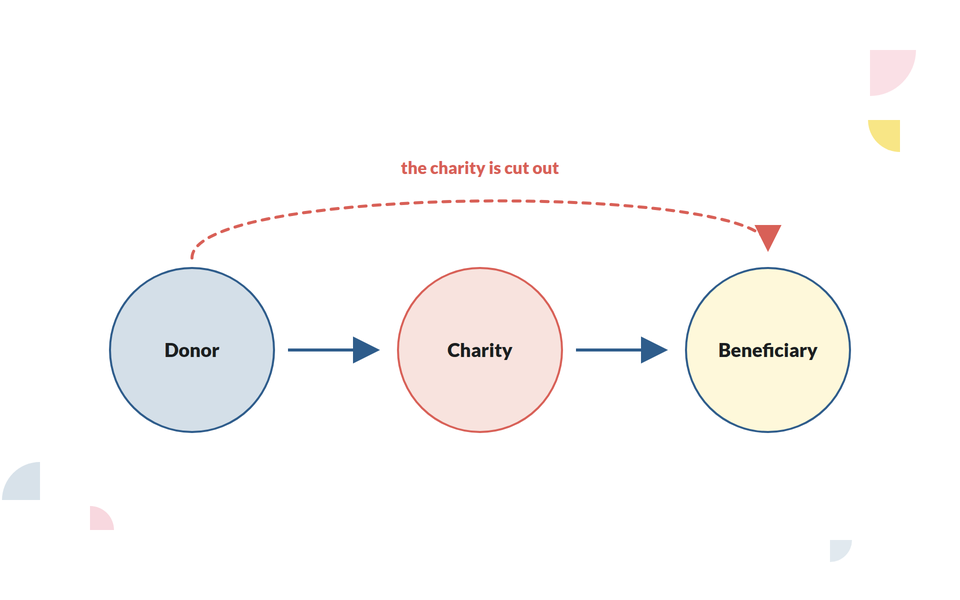
DIY peer-to-peer fundraising allows supporters to create their own fundraising pages and initiatives — outside of organised events or time-limited campaigns. It’s self-initiated, flexible, and always available.
A birthday, wedding, sporting challenge, or memorial can all become personal fundraising campaigns. The idea, timing, and motivation come from the supporter, while the charity provides the digital tools, branding, and framework.
The best programmes strike a balance between freedom and structure: supporters feel empowered, but your messaging and data remain consistent.
As DIY fundraisers often is self-initiated, they are very motivated. This is evident in the average amount fundraised per fundraiser: it is much higher for DIY fundraisers than for others. DIY fundraisers fundraise on average 1230€, while e.g. celebration and sports fundraisers i less than 700€. Only in memory fundraisers come out above DIY. (2025 numbers based on BetterNow data)
Why invest in DIY peer-to-peer fundraising
DIY fundraising creates sustainable, year-round income that complements seasonal or event-based campaigns. Once the infrastructure is in place, it grows organically with minimal overhead.
Three main advantages stand out:
Financial resilience – income spread across hundreds of small, continuous actions.
Network expansion – each fundraiser introduces your cause to their peers.
Emotional engagement – self-driven fundraisers feel personal ownership of the mission.
This form of supporter-led fundraising also taps into identity-driven motivation. People raise funds because it represents who they are — their values, community, or personal story. Your job is to make that self-expression seamless.
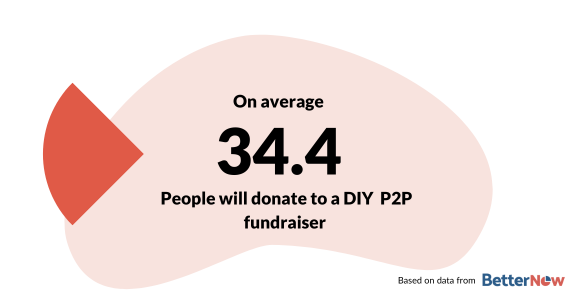
On average, 34 unique donors donate to a DIY P2P fundraiser (2025 number). This is more than any other type of fundraiser.
How to get started with supporter-led fundraising
Prepare internally
A strong DIY programme begins with clarity of purpose. Define why you are introducing it — to grow income, engage younger supporters, or increase loyalty?
Key preparation steps:
Map the supporter journey: awareness → sign-up → first donation → stewardship.
Your platform underpins the entire experience. A white-label solution offers full branding control, data ownership, and easy integration with your CRM and marketing systems — all critical for long-term loyalty.
The technology should enable simplicity and storytelling, not distract from it. Platforms like BetterNow are built to support this balance. See our full comparison of platforms versus white label solution here.
Measuring success in DIY peer-to-peer fundraising
Measurement turns DIY from an experiment into a growth engine.
Track both activity and impact:
Volume: number of new and active fundraisers.
Performance: average raised per fundraiser, total donors per page.
Engagement: repeat fundraiser rate, conversion of donors into fundraisers.
Reach: percentage of new donors acquired through DIY fundraising.
Which types of fundraising activities perform best?
Which times of year drive the most new pages?
How many first-time fundraisers return within 12 months?
Use these insights to refine onboarding, communications, and even campaign design. Over time, your DIY data will shape your broader fundraising strategy.
Common pitfalls in supporter-led fundraising
No guide is complete without meaning what not to do. Here are the pitfalls we have encountered when working with clients.
Assuming “build it and they will come.” DIY needs constant visibility and encouragement.
Neglecting post-sign-up stewardship. The first follow-up is where most drop-off happens.
Overcomplicating the setup. One clear path from start to page creation. Nothing more.
Providing too little guidance. Supporters want freedom — not confusion. Offer templates and examples.
Failing to integrate DIY into your overall strategy. It must connect to communications, CRM, and supporter journeys.
Ignoring data. DIY peer-to-peer fundraising offers insight into supporter motivation and donor acquisition. Use that intelligence across all fundraising channels.
Conclusion – combining heritage and structure
DIY fundraising is the oldest form of peer-to-peer fundraising in Scandinavia. What’s new is our ability to scale it intelligently — with digital tools, data, and deliberate design.
By merging the authenticity of supporter-led fundraising with the structured practices developed in the U.S., European charities can build resilient, year-round fundraising ecosystems that belong as much to their supporters as to their organisations.
This is not a trend. It’s a return to where we started — but done smarter.
FAQ
What is DIY peer-to-peer fundraising?
DIY peer-to-peer fundraising lets individuals create their own fundraising pages and activities for a charity, independent of formal events or campaigns.
How is DIY peer-to-peer fundraising different from event fundraising?
It’s always available, not tied to one campaign, and fully supporter-led — meaning the fundraiser decides why, when, and how to raise funds.
Why should charities invest in DIY fundraising?
It creates sustainable, evergreen income and strengthens supporter relationships through autonomy and identity-based motivation.
How much does a DIY fundraiser collect?
The average collected for a DIY fundraiser in 2025 was 1230€. This is based on the activity of BetterNow customers.
.png)




.png)