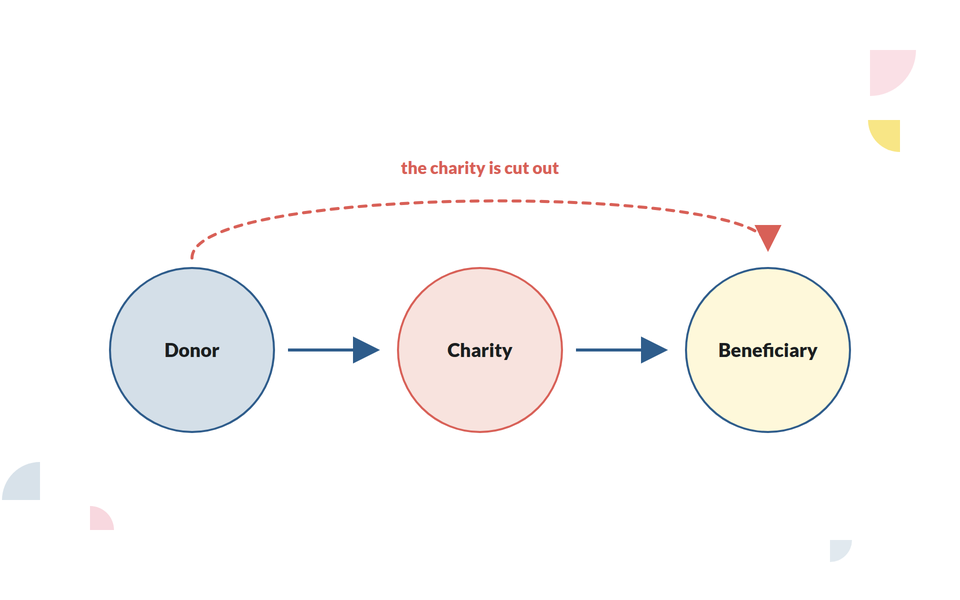
A supporter has raised €15,000 for your organisation over the past three years through peer-to-peer fundraising. They've participated in four events, recruited team members each time, and their fundraising pages tell compelling personal stories about why your cause matters to them. The donations they bring in tend to be larger than average, suggesting their network includes people with significant giving capacity.
This person is deeply committed to your mission. They've demonstrated they can ask others for money and succeed at it. They've publicly aligned themselves with your cause multiple times. By almost any measure, they're exactly the kind of prospect a major gifts officer would want to cultivate.
But in many organisations, nobody from the major gifts team has ever contacted them. They exist in the P2P database, managed by the events team, and the two worlds rarely overlap.
This is a missed opportunity that plays out in charities of all sizes. The systems and teams that manage peer-to-peer fundraising operate separately from those that cultivate major donors, and the result is that some of your most promising prospects remain invisible to the people best positioned to deepen the relationship.
Why the silos exist
The separation between P2P and major gifts isn't accidental. These functions evolved with different purposes, different metrics, and different skill sets.
P2P fundraising is typically campaign-driven. Success is measured in participation numbers, total funds raised, and event logistics executed smoothly. The team running a charity run or virtual challenge is focused on recruitment, activation, and donor experience at scale. They're managing hundreds or thousands of relationships simultaneously.
Major gifts is relationship-driven. Success is measured in individual gift size, donor retention, and the depth of engagement with a smaller portfolio of high-capacity prospects. A major gifts officer might manage fifty to a hundred relationships, each requiring personalised cultivation over months or years.
The metrics don't naturally align. A P2P manager celebrating a successful event with 500 participants isn't typically thinking about which five of those participants should be flagged for major gift cultivation. A major gifts officer building a prospect pipeline isn't usually looking at P2P participation data to find candidates.
And then there's the question of ownership. When a supporter gives €200 to a friend's fundraising page and later receives a cultivation call from major gifts, who gets credit? When a major donor agrees to lead a P2P team, whose budget covers the staff time?
These questions sound administrative, but they shape behaviour. Teams protect their territory, and supporters fall through the gaps between them.
What P2P reveals about major donor potential
Peer-to-peer fundraising generates signals that are difficult to observe any other way. A donation tells you someone has capacity and willingness to give. A P2P fundraising page tells you something deeper: this person is willing to publicly advocate for your cause and ask others to support it.
That willingness to ask is significant. It's the skill major gifts officers spend considerable time trying to develop in board members and volunteers. When someone demonstrates it unprompted, through P2P participation, they're showing you something about their relationship with your mission that a donation alone doesn't reveal.
The research backs this up. A study of nearly 2,000 peer fundraisers found that professional standing was one of the strongest predictors of fundraising success. Fundraisers with high professional status in their community were 27.8% more likely to receive donations and raised an average of $164 more than others. Only 9.1% of fundraisers in that study held this status, but they brought in 51.6% of all donations.
Professional standing often correlates with network quality and personal capacity. The people who raise the most through P2P tend to be the people whose friends and colleagues can afford to give generously. This isn't universal, but it's a pattern worth noticing.
A practical threshold: anyone raising €2,000 or more through P2P can usually only achieve that by having a network of people with meaningful giving capacity. That's a signal worth flagging.
Beyond the amount raised, other indicators suggest major donor potential: repeat participation (showing sustained commitment), increasing fundraising totals over time (showing growing engagement), the size of self-donations (suggesting personal capacity), and the quality of donors they attract (are there large individual gifts in their tally?).
We've written before about the connection between P2P fundraisers and mid-level donors. The dynamic with major donors is similar but amplified.
A fundraiser who raises €5,000 isn't just a successful participant. They're someone who has demonstrated commitment, network quality, and advocacy skills that would make them a valuable prospect for deeper cultivation—or potentially a valuable volunteer leader, board candidate, or planned giving prospect.
What major donors bring to P2P
The opportunity runs in both directions. Major donors, when invited to participate in P2P fundraising, often bring capabilities that transform campaign performance.
Their networks are typically high-capacity. When a major donor shares a fundraising page, the people who see it are often in a position to give significantly. A single well-connected team captain can shift the economics of an entire campaign.
Their participation sends a signal. When someone known for substantial giving leads a P2P team, it communicates to other potential participants and donors that this campaign is worth taking seriously. Social proof matters, and major donors provide it.
And for some major donors, P2P offers something that traditional cultivation can't: active involvement. Writing cheques is important, but it's passive. Leading a team, recruiting friends, and publicly championing a cause can be more engaging for supporters who want to feel connected to the mission rather than just funding it.
The research on professional standing mentioned earlier applies here too. People with standing in their community—which often overlaps with major donor capacity—are dramatically more effective as P2P fundraisers. If you're not inviting your major donors to lead P2P teams, you're missing out on some of your highest-potential fundraisers.
Building the bridge
Connecting these two worlds doesn't require reorganising your fundraising department. It requires creating intentional touchpoints where information and relationships can flow between them.
Start with identification. Define a threshold that triggers a flag for major gifts review. The €2,000 lifetime P2P raised mark is a reasonable starting point, but you might adjust based on your organisation's scale and major gift definitions. Other triggers could include: three or more years of consecutive participation, self-donations above €500, or fundraising totals that place someone in the top 5% of participants.
Make the data visible. The biggest barrier is often that major gifts officers simply can't see P2P activity. If your P2P platform and CRM are separate systems, ensure there's integration—whether through native connections, APIs, or even manual periodic reports. A major gifts officer reviewing a prospect should be able to see their complete relationship with your organisation, including P2P participation.
Create warm handoffs. When a P2P fundraiser crosses your threshold, don't just add them to a prospect list. Have the P2P manager introduce them to the major gifts officer personally, ideally at the event they've just participated in or shortly after. The transition should feel like recognition of their commitment, not a cold call.
Flow relationships in both directions. Just as P2P can feed the major gifts pipeline, major gifts can strengthen P2P. When cultivating a prospect, consider whether a team leadership role in an upcoming campaign might deepen their engagement. When stewarding an existing major donor, explore whether P2P participation could give them a more active role in the mission they're funding.
Plan together. Once a year, the P2P and major gifts teams should review their overlap. Who are the top 20 lifetime P2P fundraisers, and has major gifts ever contacted them? Which major donors might be interested in leading P2P teams? Where are the opportunities for collaboration in the coming year?
Getting started
If your organisation has never connected these functions, the gap might feel daunting. It isn't. Start small.
Pull a list of your top 20 P2P fundraisers by lifetime amount raised. Share it with your major gifts team. Ask a simple question: have we ever had a conversation with any of these people outside of event logistics? The answer is often revealing.
Then pick one or two names from that list—people who've raised significant amounts, participated multiple times, and shown clear commitment to your cause. Have a real conversation with them. Not a solicitation, just a conversation about their connection to your mission and what motivates their involvement.
You may find your next major donor. You may find your next board member. At minimum, you'll learn something about a supporter who clearly cares deeply about your cause and has been demonstrating it through action for years.
The goal isn't to turn every P2P fundraiser into a major donor. Most won't be. But the ones who could be are often invisible to the people who should be cultivating them. Building even a simple bridge between these two worlds can surface opportunities that have been hiding in plain sight.
And in the other direction: look at your major donor portfolio and ask who might thrive as a P2P team leader. The supporters with standing in their community, the ones who want more active involvement, the ones whose networks could transform a campaign—they're probably already on your list. They just haven't been asked.
.png)
.webp)


.png)