In-Memory Fundraising
November 27, 2026
The typical in-memory fundraiser raises €384, against €34 for other fundraisers, and three in four get a donation. Updated numbers from nearly 56,000 fundraisers on BetterNow, by year and by cause.
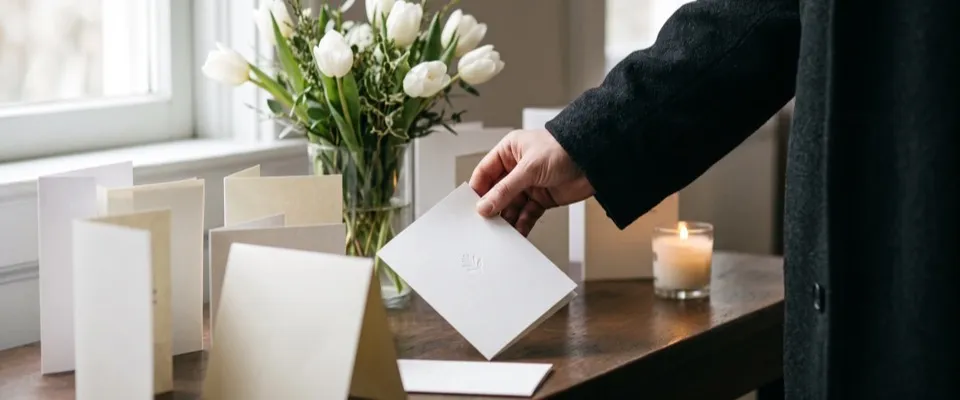
When someone dies, the family speaks to a funeral director long before they speak to a charity. The funeral director helps them write the death notice, plan the service and decide what happens with flowers. Often that's how the question "where should people give in her memory?" gets its answer.
In the Nordics, more and more of those gifts now run through the systems funeral homes use. For charities that rely on in-memory giving, it's worth knowing how that works, because it shapes what the charity gets: the funds, the names of the people who gave, and the chance to thank them.
This post goes through the setup in Sweden, Norway, Denmark and Finland, then looks at what each setup leaves the charity with, and what charities can do about it. You'll notice we have a stake here: BetterNow makes in-memory fundraisers that charities run on their own websites: a page where the family collects gifts in someone's memory. You may also know them as tribute funds, which is the UK term and the name we use in our product. They're the same thing. We've tried to describe each setup the way its providers describe it themselves, and the sources are at the end.
In-memory gifts tend to come in many small amounts from people the charity has never met: the colleagues, neighbours and old friends of the person who died. In our own data, the typical in-memory fundraiser raises €384, more than 11 times the typical fundraiser of any other kind.
Whoever runs the page mourners give on decides what they see, what they're asked, and who thanks them afterwards. In the Nordics, that is increasingly the funeral home, or the software behind it.
Since 2016, Swedish funeral homes have stopped taking cash memorial gifts, citing stricter guidelines from Finansinspektionen, the financial supervisor. The gifts have moved online since then, and largely into the funeral sector's own tools:
Behind many of these sits Pennybridge, a company from Örebro that passes the gifts on to charities. The charity signs an agreement with Pennybridge, which follows Giva Sverige's industry standard. Pennybridge takes a fee from the gifts and pays out monthly, and some partners add a fee of their own to what the giver pays.
With the payout, the charity can download a file of the donors: name, contact details, address, message, amount and personnummer, which the donor must give to get the Swedish tax reduction. Donors can choose to give anonymously, but then they lose the tax reduction. The agreement also lets the charity choose which partners show it, and Pennybridge tells charities four weeks before it adds a new partner.
So a Swedish charity does get to know who gave, and it has a say in where it appears. It learns who gave a few weeks after the funeral, from a page designed and branded by someone else.
Norway looks similar, but with more channels side by side. Memcare, whose software is used by over 1,300 funeral homes, offers memorial gifts on its memorial pages with Pennybridge. The funeral chain Jølstad launched new memorial pages with Pennybridge in October 2025.
Alongside the funeral homes' pages, mourners give through the charity's own Vipps number, a bank transfer, or a memorial collection on Spleis. The charities we talk to often reconcile gifts from four or five of these channels by hand.
In Denmark the central place is afdøde.dk, run by the media-tech company hoej.dk A/S. It has published 550,000 death notices and memorial pages since 2006, often ordered by the funeral director on the family's behalf. A memorial page can carry a memorial collection for one charity.
The terms are public and clear:
We counted about 2,300 collections listed on the site back to 2018, most of them for Kræftens Bekæmpelse. A Danish charity receiving gifts through afdøde.dk therefore gets the funds and, by default, the total, without knowing who gave.
Other memorial pages exist. Some funeral chains run their own, with greetings and flowers, and many charities run in-memory fundraisers and memorial gift pages on their own sites.
Finland looks quite different. We found no funeral home, chain or funeral software that collects gifts on a memorial page. The funeral homes' association runs Muistollesi.fi, an online death notice for its members' customers, without a gift option.
Instead, families write "kukkien sijaan" (instead of flowers) in the death notice, followed by the charity's account number. The charities run the memorial collection (muistokeräys) themselves: the family registers it with a form, mourners give by bank transfer or MobilePay with the deceased's name in the message, and a couple of weeks after the funeral the charity sends the family the names and the total. Many of the larger Finnish charities work roughly this way, and some also offer online pages the family can share.
The older channel is the adressi, a condolence card sold for a charity and read out at the memorial. Funeral homes, florists, supermarkets and card publishers sell them. A large Finnish health charity stopped selling adressit and Christmas cards itself in 2024. A card publisher now sells cards with its logo in chain stores, and the charity receives a royalty. According to its annual reports for 2024 and 2025, its income from adressi and product sales went from €90,390 in 2023 to €28,647 in 2025. The people who buy those cards are probably the shop's customers, and the charity is unlikely to learn who they are.
The law sets a clear frame for anything new. Under the Finnish fundraising act (rahankeräyslaki), a family's request for gifts in a death notice falls outside the act. Only associations, foundations and similar bodies can hold a fundraising permit, and the funds must go to a fundraising account in a Finnish bank. A funeral home or platform would therefore need to act as a service provider under the charity's own permit.
Every one of these setups solves a real problem. Families get one place to point people to. Funeral homes can offer a modern service without handling cash. Charities receive gifts they never had to ask for. That's a lot of good work, and most of it takes no effort from the charity.
It's still worth asking what the charity keeps. In our post on charity disintermediation we used a simple test from Rogare's research, with three checks: awareness (do you know the fundraising is happening?), consent (did you agree to it?) and influence (can you shape the donor experience, the messaging and the follow-up?).
Applied to in-memory gifts, the picture looks roughly like this:
For in-memory giving, the question is rarely whether the charity receives the funds. It's how much of the relationship with the donor comes with them. A colleague who gives in memory of a friend is probably more open to hearing from the charity in the days after the funeral than three months later.
Most of this is in the charity's own hands.
If you're a Finnish charity, you're in a strong position: today most in-memory gifts reach you directly. Funeral-home platforms like the Swedish and Norwegian ones will probably arrive sooner or later, and the fundraising act already means they would work under your permit. Deciding now what you'd want from such a partnership, before anyone asks, will probably give you a bigger say in how it looks.
Funeral homes and their software providers have become a key part of in-memory giving in the Nordics, and they got there by making a hard moment easier for families. Charities and funeral homes want the same thing at a funeral: a family that feels well looked after, and mourners who can do something meaningful. The charities that work with funeral homes and their providers on the details will probably get the most out of that, for the family, for the donors and for the cause.
About the sources: the descriptions of each setup come from the providers' own websites, terms and agreements, read in November 2026, and from charities' annual reports. The figure of about 2,300 collections on afdøde.dk is our own count of the site's public list. The main sources:




The typical in-memory fundraiser raises €384, against €34 for other fundraisers, and three in four get a donation. Updated numbers from nearly 56,000 fundraisers on BetterNow, by year and by cause.

Half of all birthday fundraisers go live in the last two weeks before the birthday, but the ones that start early raise the most. Data from 2,369 birthday fundraisers, and the email plan that follows from it.