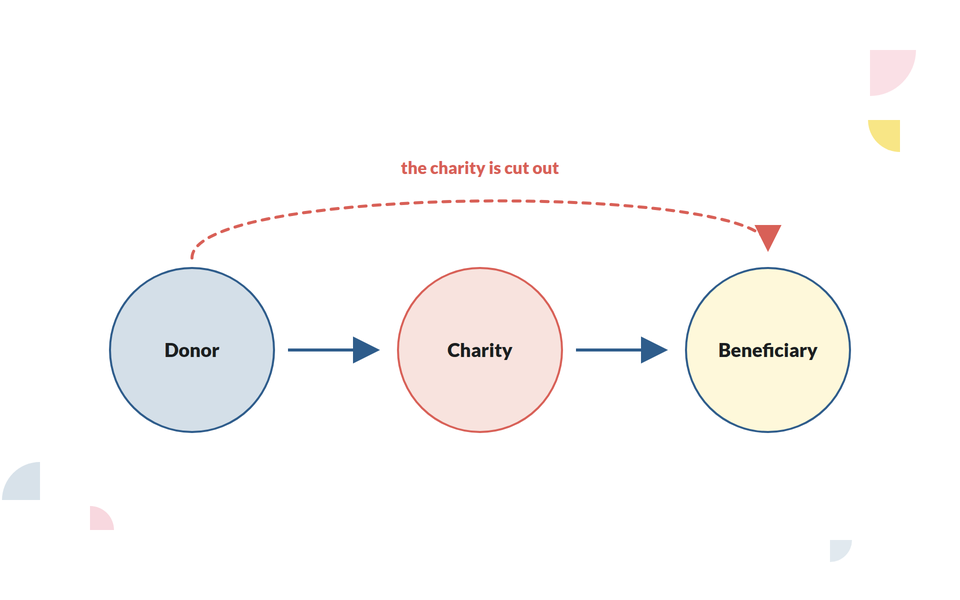
Peer-to-peer (P2P) virtual fundraising is a powerful and dynamic strategy where charity supporters use their networks to raise funds. Unlike traditional methods, virtual charity events leverage individuals' influence and reach to gather contributions, primarily through online platforms. This approach transforms supporters into active fundraisers, using digital tools and social media to share their passion and solicit donations from friends, family, and colleagues.
Virtual charity events offer numerous advantages for charities, making it an increasingly popular approach. One of its primary benefits is reaching a national or even global audience, breaking down geographical barriers that limit traditional fundraising methods.
This broader reach enhances engagement and attracts a diverse pool of donors. Additionally, digital fundraising platforms provide valuable data and insights into donor behaviours and campaign performance.
Virtual P2P ideas for charity fundraisers
Peer-to-peer (P2P) virtual fundraising campaigns have become a game-changer for charities, harnessing the power of individual networks and digital connectivity to drive donations and support. These campaigns empower participants to take an active role in fundraising by leveraging their personal connections and social media platforms.
Virtual sports challenge P2P fundraisers offer an innovative way to engage supporters in physical activities while raising funds for a cause. These events promote health and fitness while driving impactful fundraising efforts from the comfort of participants' environments.
1. 24-Hour races: Participants engage in a race or activity continuously for 24 hours, aiming to cover as much distance or complete as many laps as possible within the timeframe.
Example Campaign: A charity hosts a "24-Hour Run for Hunger" where participants run or walk for 24 hours, with each mile covered raising funds to fight hunger.
2. Step/Walking challenges: Participants track their daily steps or walking distances over a set period, aiming to reach specific step goals or overall distance targets.
Example Campaign: A charity launches a "Million Steps Challenge" where participants aim to collectively walk one million steps in a month, raising funds for environmental conservation efforts.
3. Virtual runs: Distance tied to the cause: Virtual runs where the distance participants cover is symbolically tied to the cause being supported (e.g., a 5K for 5 years of service).
Example Campaign: A charity organizes a "10K for 10 Clean Water Wells" run, where participants run 10 kilometers to raise funds for building clean water wells in underserved communities.
4. Golf marathon (Most holes in 24 hours): Participants play as many holes of golf as possible within 24 hours, raising funds based on the number of holes completed.
Example Campaign: A charity hosts a "Golf Marathon for Kids" where participants aim to play the most holes in 24 hours, raising funds for children's health programs.
5. Virtual obstacle course: Participants design their own obstacle courses in their backyard or local park, completing various challenges and raising funds based on their completion time or number of obstacles conquered.
Example Campaign: A charity organizes a "Home Heroes Obstacle Challenge" where participants create and complete obstacle courses to support disaster relief efforts.
6. Mileage match campaigns: Participants set a distance goal for running or biking, with corporate sponsors matching donations for every mile completed.
Example Campaign: A charity launches a "Miles for Meals" campaign where participants run or bike to raise funds, with each mile matched by sponsors to support meal programs for the homeless.
8. Everesting: Participants aim to climb the equivalent height of Mount Everest (8,848 meters or 29,029 feet) by repeating a specific hill or staircase. The goal is to complete this elevation gain as quickly as possible.
Example Campaign: A charity organizes an "Everesting for Education" event where participants raise funds to support educational programs by climbing the total height of Everest in their local area.
7. Virtual marathon relay: Teams of participants run a marathon distance (26.2 miles) by splitting the distance among team members, each completing a portion of the marathon.
Example Campaign: A charity hosts a "Relay for Literacy" event where teams run a marathon to raise funds for literacy programs in underfunded schools.
8. Virtual city tour: Participants virtually tour famous cities by running or biking the equivalent distance of the city's landmarks or historical sites.
Example Campaign: A charity organizes a "Tour de Paris" event where participants run or bike the distance between iconic Paris landmarks to raise funds for cultural preservation.
9. Charity fitness challenges: Participants engage in daily fitness challenges, such as push-ups, sit-ups, or squats, and raise funds for each challenge completed.
Example Campaign: A charity launches a "Fit for a Cause" challenge where participants complete daily fitness tasks to support health and wellness programs in their community.
10. Distance duathlon: Participants combine running and biking over a set distance, tracking their progress and raising funds through sponsorships.
Example Campaign: A charity organizes a "Run & Ride for Research" duathlon to support medical research initiatives.
11. Virtual running club: Participants join a virtual running club, sharing their progress and supporting each other while raising funds collectively.
Example Campaign: A charity creates a "Run for a Cause Club" where members run together virtually and raise funds for various social causes.
12. Virtual triathlon: Participants complete a swim (or an alternative like rowing), bike, and run within a set period, tracking their progress and raising funds for their efforts.
Example Campaign: A charity hosts a "Triathlon for Clean Water" event where participants swim, bike, and run to raise funds for clean water projects in underserved communities.
13. Distance accumulation challenges: Participants aim to accumulate a certain distance over a longer period, such as running or biking 500 miles in six months, raising funds along the way.
Example Campaign: A charity launches a "500 Miles for Hope" challenge, encouraging participants to run or bike 500 miles over six months to support cancer research.
14. Nature trail run/bike: Participants run or bike in nature trails or parks, raising awareness and funds for environmental conservation.
Example Campaign: A charity hosts a "Trailblazers for Trees" event to support reforestation projects.
15. Cross-country journey: Participants aim to run or bike the distance from coast to coast, tracking their progress on a virtual map and raising funds along the way.
Example Campaign: A charity organizes a "Coast-to-Coast Challenge" to raise funds for national disaster relief efforts.
16. Buddy run/bike: Participants pair up virtually with a buddy, motivating each other and tracking their combined progress to achieve a collective distance goal.
Example Campaign: A charity creates a "Buddy Miles for Mental Health" event, where pairs run or bike together (virtually) to support mental health awareness and programs.
17. Run/Bike with a pet: Encourage participants to run or bike with their pets, sharing photos and raising funds for animal shelters or pet rescue organizations.
Example Campaign: A charity hosts a "Paws & Pedals for Pets" event, where participants run or bike with their furry friends to support local animal shelters.
18. Virtual relay race across time zones: Teams from different time zones run or bike, passing the virtual baton from one timezone to the next, creating a continuous global relay.
Example Campaign: A charity organises a "Global Relay for Peace" event, where teams raise funds for international peacekeeping efforts by completing a 24-hour continuous relay across various time zones.
19. Sunrise/Sunset runs/bikes: Participants run or bike during sunrise or sunset, capturing the beauty of these times and sharing their experiences on social media to inspire donations.
Example Campaign: A charity organises a "Sunrise Steps for Shelter" event to raise funds for homeless shelters, encouraging participants to run or bike during early mornings or evenings.
Harness the power of creativity with artistic peer-to-peer (P2P) fundraising events. From virtual art auctions and live painting sessions to musical performances and theater productions, these events enable supporters to use their talents to raise funds for your cause.
1. Craft-a-thons: Craft-a-thons are events where participants engage in crafting activities such as creating artwork, DIY projects, or handmade items, and raise funds through sponsorships. Each participant gathers sponsors who pledge donations based on the number of items created or the hours spent crafting.
Example Campaign: “Craft-a-thon for Cancer Research” where participants spend a weekend creating various crafts. Each participant sets up a fundraising page to collect pledges from sponsors, sharing updates and photos of their creations throughout the event.
2. Music and performance: Host virtual concerts or performances where artists dedicate their shows to supporting a specific cause. These events can be live-streamed, with viewers encouraged to donate during the performance.
Example Campaign: A charity organizes a “Concert for Clean Oceans,” featuring performances by various artists. The concert is live-streamed on multiple platforms, with donation links prominently displayed. Artists share personal stories about why they support the cause, encouraging viewers to contribute.
3. Online quiz nights for charity: Organize virtual quiz nights where participants can join from the comfort of their homes. Teams compete in trivia contests, with entry fees and donations going to the charity.
Example Campaign: A charity hosts a “Quiz Night for Literacy,” inviting participants to form teams and compete in a virtual trivia contest. Entry fees and additional donations support literacy programs. Winners receive small prizes, and participants enjoy a fun night of competition and camaraderie.
4. Streaming: Gamers and influencers can stream their activities—such as playing video games, conducting tutorials, or hosting live chats—with proceeds going to the charity. Viewers can donate directly through the streaming platform or via a dedicated fundraising page.
Example Campaign: A popular gamer hosts a “Gaming Marathon for Wildlife Conservation,” streaming their gameplay for 24 hours. During the stream, they share information about the conservation efforts and encourage viewers to donate. The gamer sets donation milestones with special in-game challenges or shout-outs to donors, keeping the audience engaged and motivated to contribute.
5. Photography contests: Organize a photography contest where participants submit their best photos for a chance to win prizes. Entry fees and votes for the best photos generate funds.
Example Campaign: A charity launches "Snapshots for Shelter," a photography contest to support homeless shelters. Participants submit photos of their city, and the public votes for their favorites by donating.
6. Book reading marathons: Participants read books aloud in a live stream, collecting donations based on the number of chapters or hours read.
Example Campaign: A charity organizes a "Read-a-thon for Refugees," where participants read books for 24 hours straight, raising funds to support refugee assistance programs.
7. Virtual art exhibitions: Create a virtual gallery where artists can display their work, and visitors can make donations to view or purchase pieces.
Example Campaign: A charity sets up "Gallery for Good," an online exhibition featuring artworks from emerging artists. Visitors donate to access the gallery, with proceeds supporting local art education programs.
8. Collaborative murals: Participants contribute to a large, collaborative virtual mural, with each piece of the mural representing a donation milestone.
Example Campaign: A charity hosts "Mural for Mental Health," where each donation milestone unlocks a new piece of a virtual mural, raising awareness and funds for mental health services.
The power of virtual Peer-to-Peer (P2P) fundraising
Virtual peer-to-peer (P2P) fundraising offers significant advantages for charities and nonprofits, transforming the way they engage with supporters and raise funds. By leveraging these benefits, charities can optimise their campaigns, foster a stronger sense of community, and ultimately achieve greater impact for their causes. For more inspiration, explore our guide on virtual fundraising ideas to raise money online.
Cost-effectiveness
Virtual P2P fundraising is highly cost-effective compared to traditional fundraising methods. Traditional events often require significant expenditures on venues, catering, transportation, and printed materials. In contrast, virtual P2P campaigns leverage digital platforms, reducing or eliminating these costs.
By utilising online tools and social media, charities can minimise overhead and direct more funds towards their mission. Additionally, digital platforms typically offer robust, user-friendly tools for creating and managing fundraising campaigns at a fraction of the cost of physical events.
National reach
One of the most compelling advantages of virtual P2P fundraising is its national reach. Unlike traditional fundraising, which often depends on local events and community networks, virtual P2P campaigns can engage supporters nationwide.
Using social media, email, and other digital channels, fundraisers can widely share their campaigns, reaching a broader and more diverse donor base. This extensive reach boosts the potential for donations and also significantly increases national awareness of the charity.
Data collection
Virtual P2P fundraising offers charities crucial data and insights to enhance their efforts. Digital fundraising platforms can track metrics like donation amounts, donor demographics, campaign engagement, and social media interactions.
With real-time tracking, charities can make informed decisions and adjust their strategies dynamically to optimise campaign results. By analyzing donation patterns, such as peak donation times and popular amounts, charities gain a better understanding of donor behavior, allowing them to time appeals effectively and suggest appropriate donation amounts.
Audience targeting
By leveraging the detailed data collected from virtual P2P campaigns, charities can refine their audience targeting strategies. They can segment donors based on various criteria, including donation history, geographic location, and engagement levels.
This segmentation enables more personalised communication and tailored appeals, which enhance donor engagement and retention.
With a better understanding of their audience, charities can craft messages that resonate more deeply, increasing the likelihood of donations and fostering long-term support.
Accessibility
Removing physical and geographic barriers enables individuals with disabilities, mobility issues, or other constraints to engage from the comfort of their homes. The flexibility of virtual fundraising accommodates varying schedules and responsibilities, making it easier for everyone to get involved. With compatibility with assistive technologies like screen readers and voice recognition software, these platforms ensure that visually, audibly, or motor-impaired individuals can navigate effectively.
Additionally, multilingual support and user-friendly design cater to people from different linguistic and cultural backgrounds, while customisable accessibility features like adjustable text sizes and high-contrast modes further enhance usability.
Broad device compatibility allows supporters to participate using their preferred devices, and online communities provide a supportive environment for sharing tips and encouragement.
Effective incentives for virtual P2P fundraisers
Motivating participants in virtual charity events is crucial for maximising engagement and fundraising success. By implementing effective incentive strategies, charities can encourage fundraisers to stay active, reach their goals, and feel valued for their contributions.
Introduce elements of competition, such as leaderboards and badges, to motivate participants. For example, create challenges where fundraisers can earn points for various activities like creating their fundraising page, sharing it on social media, or reaching donation milestones.
Personal goals
Encourage participants to set personal fundraising goals and track their progress. Providing tools for goal-setting and progress tracking can keep participants focused and motivated.
Regular updates
Keep participants engaged with regular updates about the campaign’s progress, success stories, and the impact of their efforts. Personalized messages and regular communication can maintain momentum and excitement.
Peer support
Foster a sense of community among fundraisers by creating online groups or forums where participants can share tips, experiences, and encouragement. Peer support can be a powerful motivator.
Exclusive content
Offer exclusive content, such as webinars, behind-the-scenes videos, or virtual meet-and-greet sessions with key figures from the charity, as a reward for active participation.
Ideas for prizes when reaching certain fundraising milestones
Offering prizes to your supporters can boost their fundraising efforts. Fun rewards for hitting certain milestones not only motivate participants but also add a bit of excitement and friendly competition. Here are some prize ideas to inspire and encourage your fundraisers to reach their goals.
Merchandise
Branded items such as t-shirts, hats, mugs, or tote bags that participants can proudly display as symbols of their contribution and support.
Digital badges and certificates
Digital badges and certificates of achievement that fundraisers can display on their social media profiles or personal websites to showcase their accomplishments.
Exclusive experiences
Invitations to exclusive virtual events, such as meet-and-greet sessions with the charity’s leaders, virtual tours, or behind-the-scenes looks at the charity’s work.
Discounts and vouchers
Discount codes or vouchers for popular online retailers or services, incentivizing participants with tangible rewards.
Recognition in charity communications
Feature top fundraisers in the charity’s newsletter, website, or social media channels, giving them public recognition for their efforts.
Importance of recognition and best practices
In virtual charity events, where participants may have lower levels of commitment due to the lack of physical interaction and the ease of disengagement, incentives like merchandise become particularly important. Here’s why:
Motivation to participate: Offering tangible rewards provides a clear, immediate benefit for participants, encouraging them to join the challenge in the first place. Merchandise serves as a visible and attractive incentive that can entice people to commit to fundraising.
Tangible recognition: Virtual environments often lack the physical presence and social cues that help reinforce commitment. Merchandise acts as a tangible token of appreciation, giving fundraisers something concrete to associate with their efforts and achievements.
Enhanced engagement: Receiving incentives throughout the campaign can keep participants engaged and motivated. Regular rewards help maintain excitement and drive continuous effort, preventing drop-offs in participation.
Social proof and visibility: Branded merchandise can increase the visibility of the campaign. When participants wear or use their rewards, it serves as a conversation starter and a form of social proof, encouraging others to participate and donate.
Sense of accomplishment: Completing a virtual challenge can feel abstract. Receiving a physical reward provides a sense of accomplishment and closure, making the fundraising efforts feel more real and rewarding.
Building loyalty: Incentives help build a stronger emotional connection to the cause. When participants receive meaningful rewards, they are more likely to develop a sense of loyalty and continue supporting the charity in the future.
Creating a community: Merchandise can help create a sense of community among participants. When fundraisers share pictures of themselves with their rewards on social media, it fosters a collective identity and solidarity among supporters.
Recognising the efforts of fundraisers is crucial for several reasons:
It boosts their motivation and commitment, making them feel valued and appreciated for their contributions. This acknowledgement fosters a stronger emotional connection to the charity, increasing the likelihood of long-term support.
Public recognition also inspires others to participate, creating a positive feedback loop that can enhance overall fundraising efforts. Additionally, it reinforces a sense of community and shared purpose among fundraisers, further driving engagement and success in future campaigns.
Navigating virtual P2P fundraising: Common pitfalls and effective solutions
While virtual P2P fundraising offers numerous advantages, it also comes with its own set of challenges that can impact the success of a campaign. From technology barriers to engagement fatigue, charities must navigate various pitfalls to maximise their fundraising efforts.
Understanding these potential issues is crucial for developing strategies to overcome them and ensure a smooth, effective virtual fundraising experience. In this section, we will explore the common pitfalls of virtual P2P fundraising and provide insights into how charities can address and mitigate these challenges.
Not doing incentives right: Not offering the right incentives can significantly hinder a fundraiser's success. Without attractive incentives, potential fundraisers may lack the motivation to start or may not put in enough effort to achieve their fundraising goals. Solution: Try to implement a tiered reward system where fundraisers earn progressively better rewards as they reach higher fundraising milestones. This encourages continuous effort and sets clear goals.
Engagement fatigue: Constant online engagement can lead to digital fatigue among supporters. With numerous virtual events and campaigns vying for attention, participants may become less responsive or motivated over time. Solution: Keep campaigns fresh and engaging by varying the types of activities and challenges. Use a mix of short-term and long-term goals to maintain interest. Regularly update content and incorporate fun, interactive elements to keep participants motivated.
Lack of personal connection: Virtual interactions can lack the personal touch of face-to-face events. The absence of physical interaction and a community atmosphere can make it harder to build strong emotional connections with the cause. Solution: Foster a sense of community through virtual meetups, video messages from beneficiaries, and interactive webinars. Encourage fundraisers to share personal stories and reasons for supporting the cause to build emotional connections.
Dependence on social media algorithms: Virtual P2P fundraising often relies heavily on social media for promotion. However, changes in social media algorithms can affect the visibility of fundraising posts, limiting their reach and impact. Solution: Diversify your promotion strategies by using email marketing, newsletters, and direct outreach in addition to social media. Encourage participants to use personal messages and direct sharing methods to reach their networks more effectively.
Competition for attention: The online space is crowded with various causes and campaigns. Standing out and capturing the attention of potential donors can be challenging amidst the multitude of digital fundraising efforts.
Solution: Develop a strong, unique narrative that clearly differentiates your campaign from others. Use compelling visuals and stories to capture attention. Timing your campaign strategically to avoid overlap with other major events can also help.
Creating a thriving P2P virtual fundraising community
A strong P2P community encourages participants to share resources, support each other, and collectively promote the cause, leading to more effective and sustainable fundraising efforts.
Regular updates, encouragement, and recognition keep fundraisers enthusiastic and accountable. Ongoing communication provides essential support and resources, while fostering a sense of community among participants.
Recognition is crucial in fundraising as it boosts motivation, fosters loyalty, and encourages continued support. Effective implementation involves personalized thank-you notes, public acknowledgements on social media and websites, and tangible rewards like certificates or merchandise.
Charities can enhance engagement and build stronger, long-term relationships with their supporters by making fundraisers feel valued and appreciated.
In conclusion, virtual P2P fundraising harnesses the power of digital connectivity and personal networks to revolutionise the way charities raise funds. Its cost-effectiveness, expansive reach, and ability to engage and motivate supporters make it an invaluable tool for any fundraising strategy.
By fostering a sense of community, enabling innovative approaches, and providing detailed insights, virtual P2P fundraising empowers charities to maximise their impact and build lasting relationships with donors. Don’t miss out on the opportunity to transform your fundraising efforts and make a greater impact.

.png)
.png)


.png)